Roots and Patterns
Three letters, dozens of words. Once you see how roots and patterns work together, you can guess the meaning of a word you have never seen.
The root gives the meaning; the pattern gives the kind of word: a place, a tool, a job or an action.
One root, a whole family
Root = meaning, pattern = template
Most Hebrew words are built from a root of three letters: the consonants that carry the basic meaning. כ־ת־ב is about writing, ל־מ־ד about learning, ס־פ־ר about stories and counting.
The root is poured into a pattern (מִשְׁקָל): a fixed template of vowels and extra letters. Think of dough and cookie cutters: the same dough in different cutters gives different cookies, and the same cutter with different doughs gives cookies of the same shape.
For nouns the template is called a מִשְׁקָל, and for verbs a בִּנְיָן. The idea is the same.
The כ־ת־ב family
he wrote (verb)
letter (mail)
address
reporter, journalist
writing
he dictated (read aloud for others to write)
he corresponded
spelling
The tag on each card is the pattern or the binyan. Notice that the letters כ, ת, ב always appear in the same order.
Why is this worth so much?
Every root you learn opens up a whole family. Know that פ־ת־ח is about opening? Then מַפְתֵּחַ (key), פְּתִיחָה (opening), פָּתוּחַ (open) and הִתְפַּתֵּחַ (developed) are already half familiar.
How to find the rootkey skill
Peel off the pattern
Remove whatever belongs to the pattern: letters at the start (מ, ה, ת, נ, י, א), endings (־ה, ־ת, ־ים, ־ות) and vowel letters (ו, י) in the middle. What is left, usually three letters, is the root.
Then check: does the meaning fit? מִשְׂחָק (game), שׂוֹחֵק (plays) and שַׂחְקָן (player, actor) are all about playing. That is a sign you have found the right root.
Sometimes a letter from the list really is part of the root: in מִסְפָּר the מ belongs to the pattern, but in מָכַר (מ־כ־ר, to sell) it is in the root. Meaning decides.
Letters that usually belong to the pattern
At the start
At the end
Word → root
Quick check
What is the root of this word?
מַחְשֵׁב
Patterns for places and toolsמִ־ and מַ־
מִקְטָל = place, מַקְטֵל = tool
The pattern מִקְטָל (and מִקְטָלָה) usually gives the place where the action happens. ט־ב־ח is about cooking, so a מִטְבָּח is the place where you cook.
The pattern מַקְטֵל (and מַקְטֵלָה) usually gives a tool: the thing that does the action. פ־ת־ח is about opening, so a מַפְתֵּחַ is the tool that opens.
ק־ט־ל are dummy letters that grammarians use to show a pattern. Put the letters of a root in their place.
Places: מִקְטָל / מִקְטָלָה
kitchen: a place to cook
factory: a place where people work
restaurant: a place to dine
clinic: a place to heal
Tools: מַקְטֵל / מַקְטֵלָה
computer: the tool that calculates
key: the tool that opens
comb: the tool that combs
camera: the tool that takes photos
A guessing game
See a new word that starts with מִ or מַ? Try thinking of a place or a tool. It does not always work (a מִכְתָּב, a letter, is not a place), but it works often enough to be an excellent guess.
People and actions
קַטָּל = job, קַטְלָן = habit
The pattern קַטָּל, with a dagesh in the middle letter, usually gives a profession: someone who does the action as their job. A צַלָּם takes photos, a טַבָּח cooks.
The pattern קַטְלָן gives someone who does something a lot, usually too much: a שַׁקְרָן lies, a פַּחְדָן is afraid. It is a trait, not a job.
The feminine of קַטָּל usually ends in ־ֶת: צַלֶּמֶת, טַבַּחַת. The feminine of קַטְלָן ends in ־ִית: שַׁקְרָנִית, סַקְרָנִית, פַּחְדָנִית.
Professions: קַטָּל
photographer
cook, chef
carpenter
gardener
Traits: קַטְלָן
liar
coward
curious
chatterbox
Some of these words are a mild insult and some are affectionate: סַקְרָן is usually a compliment.
The action noun: each binyan has its own pattern
| Binyan | Verb | Action noun | Pattern |
|---|---|---|---|
| פָּעַל | כָּתַב | כְּתִיבָה | קְטִילָה |
| פִּעֵל | דִּבֵּר | דִּבּוּר | קִטּוּל |
| הִפְעִיל | הִזְמִין | הַזְמָנָה | הַקְטָלָה |
| הִתְפַּעֵל | הִתְרַגֵּשׁ | הִתְרַגְּשׁוּת | הִתְקַטְּלוּת |
This is the link between verbs and nouns: know a verb’s binyan, and you know what its action noun sounds like.
Quick check
ס־פ־ר in the קַטָּל pattern (a job). What is it?
סַפָּר
Endings that change the kind of word
Add an ending, get a new word
Patterns are not the only way to make words. An ending added to an existing word changes its kind too: from יֶלֶד (child) you get יַלְדוּת (childhood, a concept), from בַּיִת (home) you get בֵּיתִי (homey, an adjective), from סֵפֶר (book) you get סִפְרִיָּה (library, a place).
The ending ־ִי is also how you say a nationality or a language: יִשְׂרְאֵלִי, רוּסִי, אֲמֵרִיקָאִי.
Three useful endings
| Ending | What it makes | Examples |
|---|---|---|
| ־וּת | an abstract noun: childhood, friendship, speed | יַלְדוּת · חֲבֵרוּת · מְהִירוּת |
| ־ִי | an adjective from a noun: Israeli, homey, global | יִשְׂרְאֵלִי · בֵּיתִי · עוֹלָמִי |
| ־ִיָּה | a place: library, bakery, carpentry workshop | סִפְרִיָּה · מַאֲפִיָּה · נַגָּרִיָּה |
Doubling: smaller, “-ish”
Double the last two letters of the root. With colours it means “-ish”; with animals and objects it means “small and sweet”.
Roots are alive: new wordsthe fun part
Hebrew keeps making words
When a new word enters Hebrew, speakers do not leave it foreign. They pull out its consonants and pour them into a Hebrew binyan, usually פִּעֵל: Google becomes ג־ג־ל, and from there לְגַגֵּל, גִּגַּלְתִּי, מְגַגֵּל.
The Academy of the Hebrew Language also builds new words from old roots. מַחְשֵׁב (computer), from the root ח־שׁ־ב, was a big success. מִרְשֶׁתֶת (from רֶשֶׁת, net) was proposed instead of “internet”, but almost everyone still says אִינְטֶרְנֶט.
A root can also have four letters (פ־ר־ג־ן) or even five (ס־נ־כ־ר־ן). The binyan copes with that too.
Four recently born words
to google
to text, send an SMS
to sync (devices)
to be generous with praise, to be happy for someone’s success (from Yiddish)
Guess the meaning
ק־ד־ח = to drill. What is a מַקְדֵּחַ?
מַקְדֵּחַ
Common mistakes
- כְּתִיבָה ← כ־ת־יכְּתִיבָה ← כ־ת־ב
ו and י in the middle of a word are usually vowel letters, not part of the root.
- מַחְשֵׁב ← מ־ח־שׁמַחְשֵׁב ← ח־שׁ־ב
מ at the start of a word is usually part of the pattern (a place or a tool).
- סֵפֶר = סַפָּרסֵפֶר ≠ סַפָּר
Same root, different patterns, different meanings: a סֵפֶר you read, a סַפָּר cuts hair, a מִסְפָּר you count.
What to remember
- Root (usually three letters) = meaning. Pattern = kind of word.
- To find the root, strip prefixes, endings and vowel letters.
- מִקְטָל = place, מַקְטֵל = tool, קַטָּל = job, קַטְלָן = habit.
- ־וּת = concept, ־ִי = adjective, ־ִיָּה = place. Doubling = small or “-ish”.
Practice the words from this lesson
The same words, five ways to play. Your best score is kept on this device; sign in to earn XP and keep your streak.
Ready to Test Your Knowledge?
Match each Hebrew word to its correct English translation. Build your streak and show off your skills! 🎯
- 10 questions
How was this lesson?
Thirty seconds of your feedback shapes the next lesson.
Tap a star to start
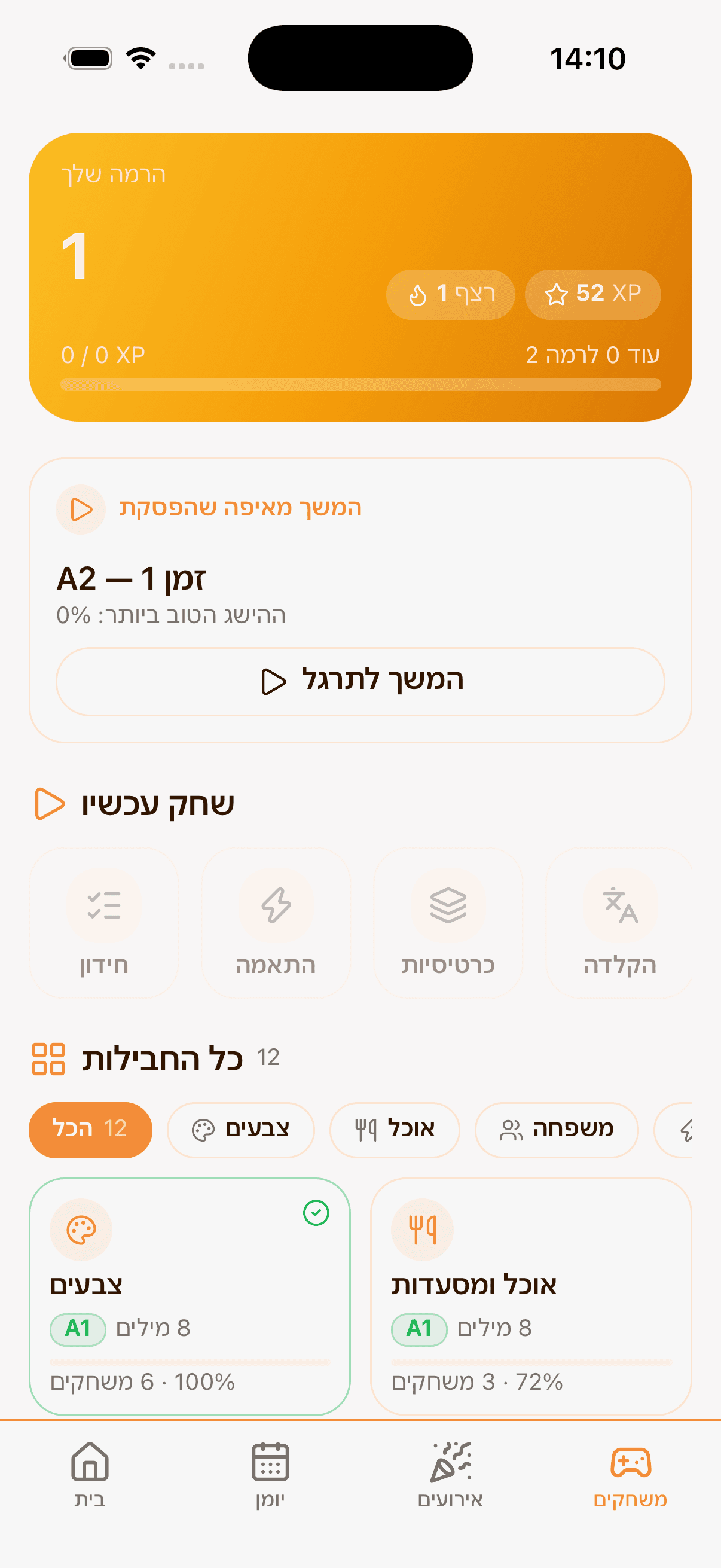
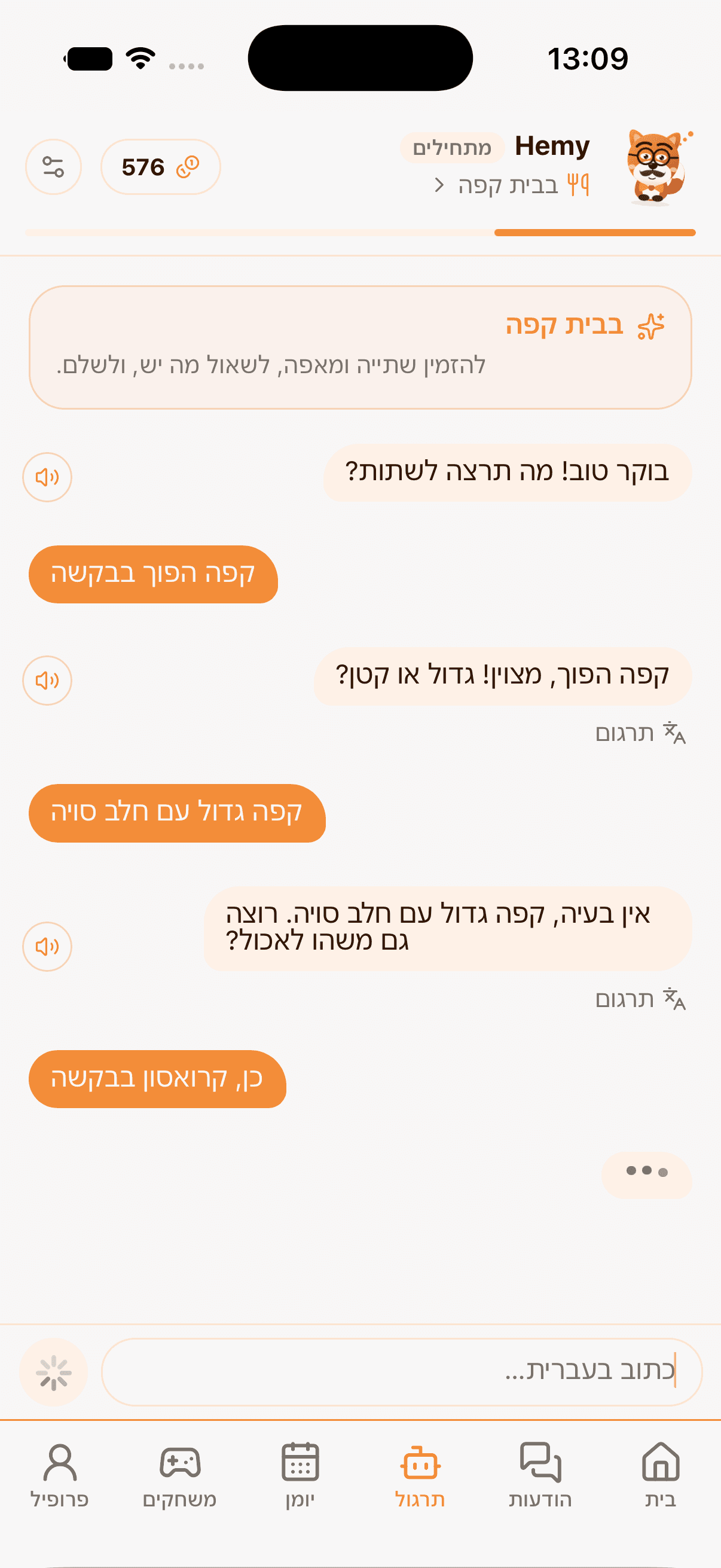
All your Hebrew in your pocket
Download the app and keep learning anywhere: lessons, practice, games and progress synced with your account.
Smart practice anytime
Short lessons, games and flashcards same as the web, just in your pocket.
Reminders and daily streaks
Gentle notifications that keep you consistent, without the noise.
Works offline too
The words and lessons you started keep working on the bus.

Scan with your camera to download


Frequently asked questions
- Does every Hebrew word have a root?
- Most words do, but not all. Loanwords like טֶלֶפוֹן, בַּנָּנָה and אוֹטוֹבּוּס are not built from a root. A few ancient, basic words, like אָב (father), יָד (hand) and אִישׁ (man), are too short to fit a pattern and are learned as they are.
- Do patterns always give the same meaning?
- Not always, but often enough to help. מִקְטָל is usually a place (מִטְבָּח, מִפְעָל), but a מִכְתָּב is a letter, not a place. Treat a pattern as a good hint, not a law.
- What is ק־ט־ל?
- Dummy letters that grammarians use to write a pattern without a real root. קַטָּל means “any root in this template”: צַלָּם, טַבָּח, נַגָּר. Some books use פ־ע־ל for the same purpose.
- How does this lesson help me speak?
- It multiplies your vocabulary. Every new root brings a family with it, and every pattern you know helps you guess new words in books, on signs and in conversation, even without a dictionary.
Finished this lesson?
Mark it complete to track your path through the grammar course.