Reading: Letters, Shva and Dagesh
A practical introduction to the alphabet, the final letters and the reading rules that let you decode a new word on your own.
This is the lesson to start with. It covers the letters and the first reading signs; the next lesson adds the vowel signs (nikud), and together they let you read any vocalised word.
The alphabet and the direction of writing
Right to left, and no capitals
The Hebrew alphabet has 22 letters and is written from right to left. There is no distinction between upper and lower case, which makes the start much easier.
Each letter has two everyday shapes: print and handwriting. Beginners should start with the print shape — it is clearer and it is what books, signs and screens use.
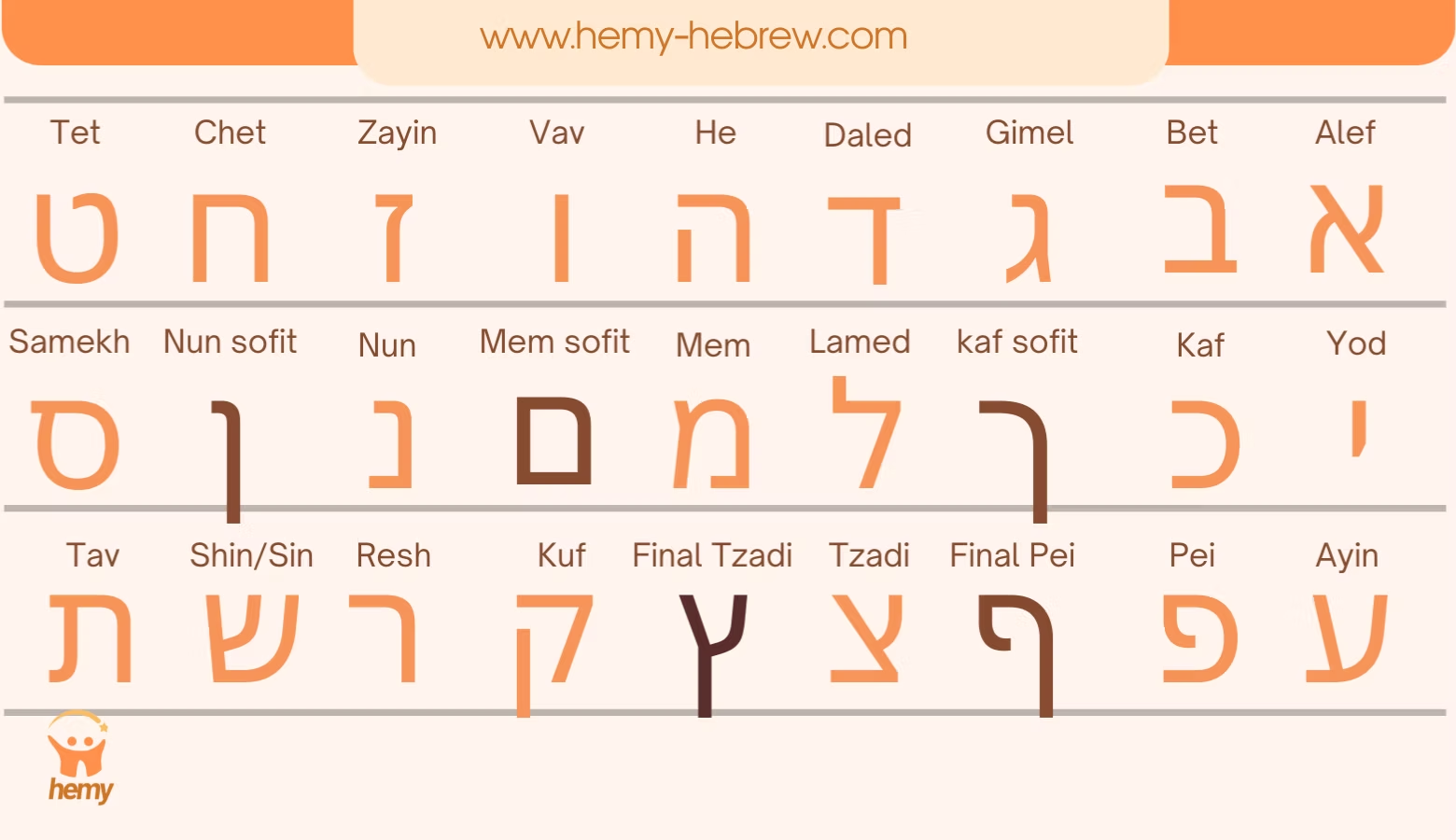
The five final letters
Five letters take a different shape at the end of a word: כ, מ, נ, פ, צ become ך, ם, ן, ף, ץ.
Why final forms exist at all
They mark where a word ends, which speeds up reading in dense text.
What makes them recognisable
The shapes ך, ם, ן, ף, ץ either drop below the writing line or close up, so a quick glance is enough to spot them.
The same letter, two shapes
A final form is not an extra letter but a variant of the same one, which is why it is not counted among the 22.
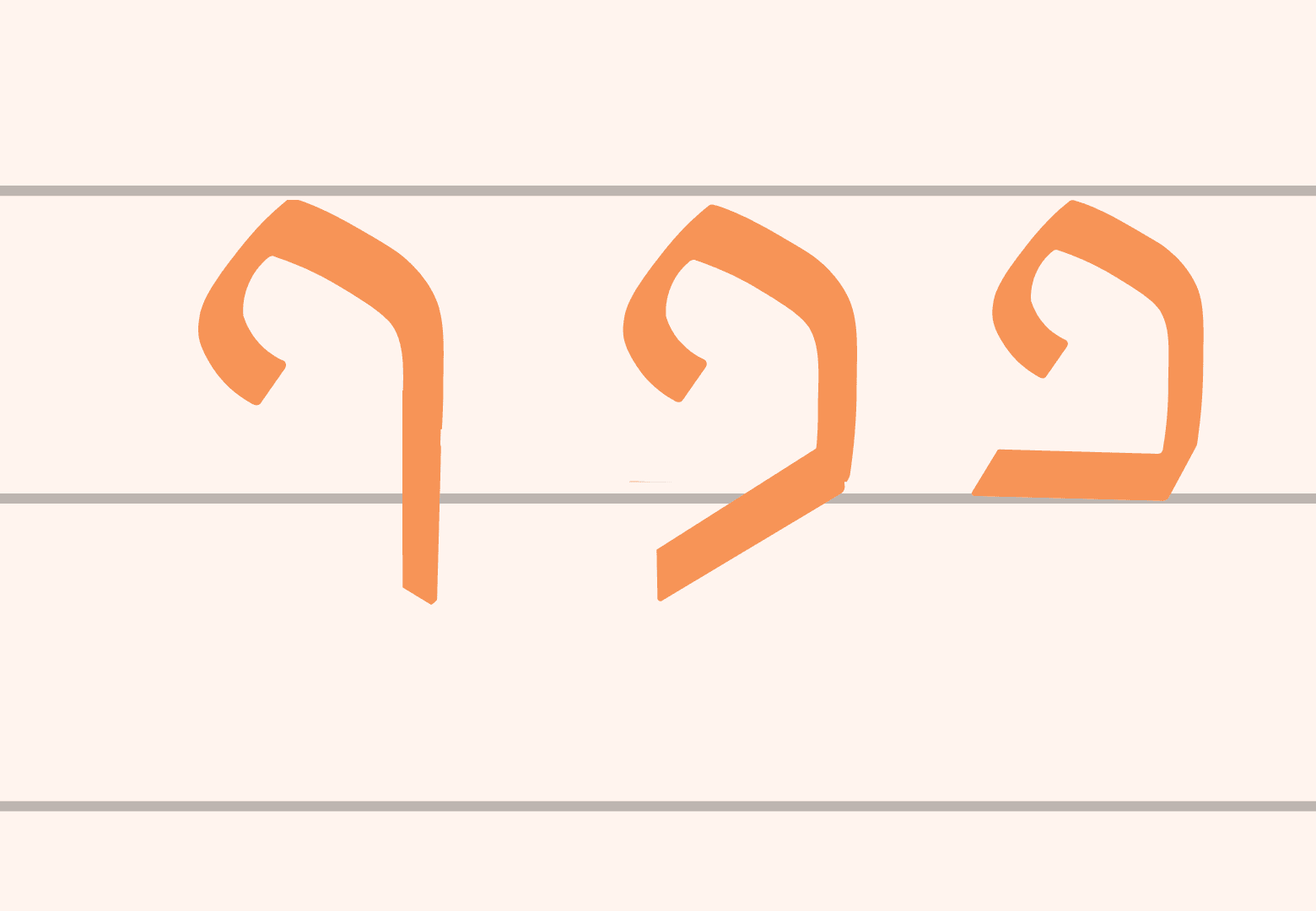
Quick check
Which is the final form of מ?
Silent and mobile shvaTwo dots, two sounds
What a shva is
A shva is two dots stacked under a letter. That exact same mark can be a very short vowel or no sound at all, so it is worth learning to tell the two apart.
In everyday Israeli speech a shva at the start of a word is clearly heard under י, ל, מ, נ, ר and in the prefixes בְּ, לְ, וְ, כְּ (יְלָדִים, ye-la-dim), but it is often swallowed elsewhere: סְפָרִים is said sfarim.
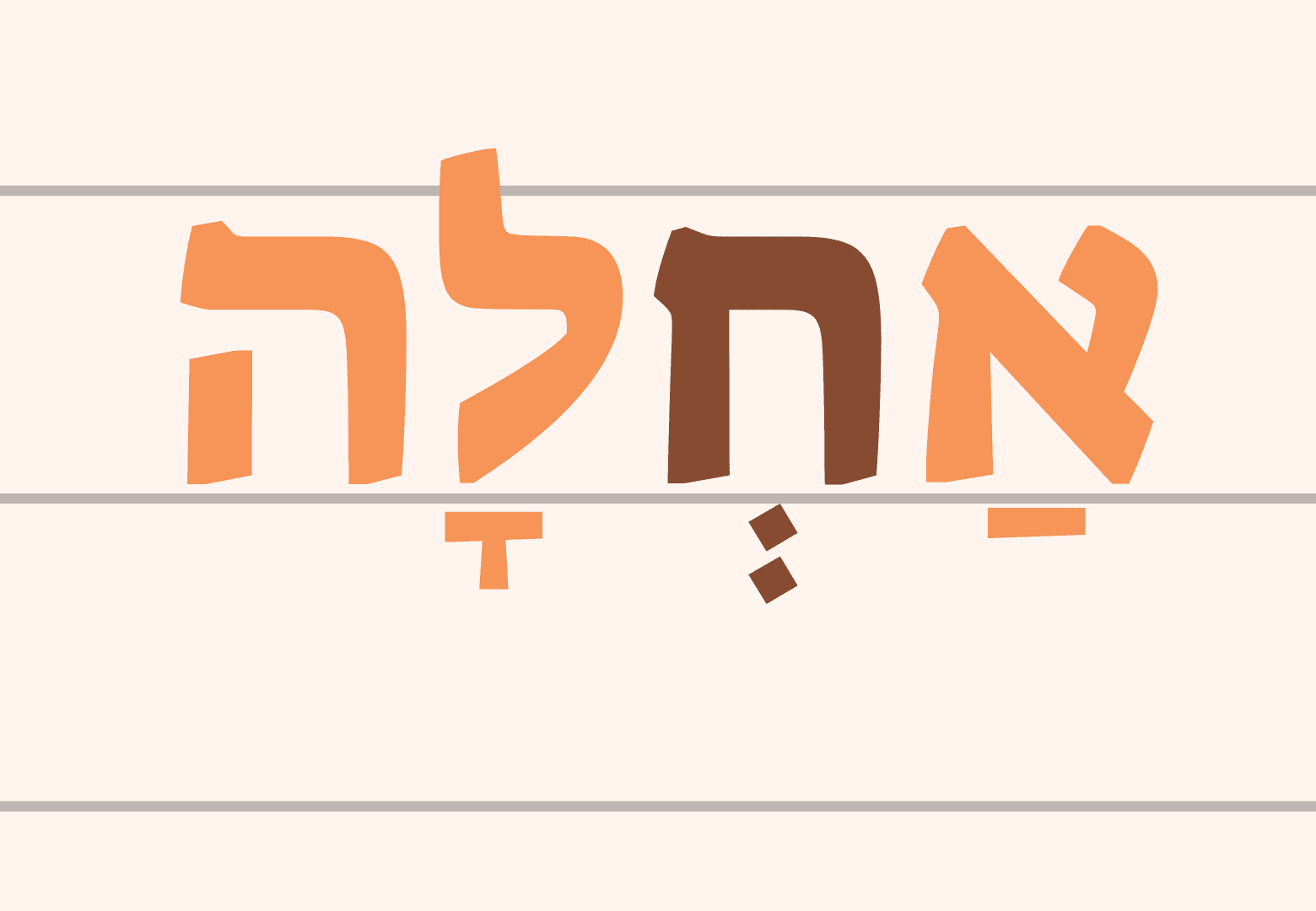
Silent shva — not pronounced
It marks the end of a syllable. The letter is pronounced with no vowel after it, creating a short break inside the word.
akh-la
great (slang)
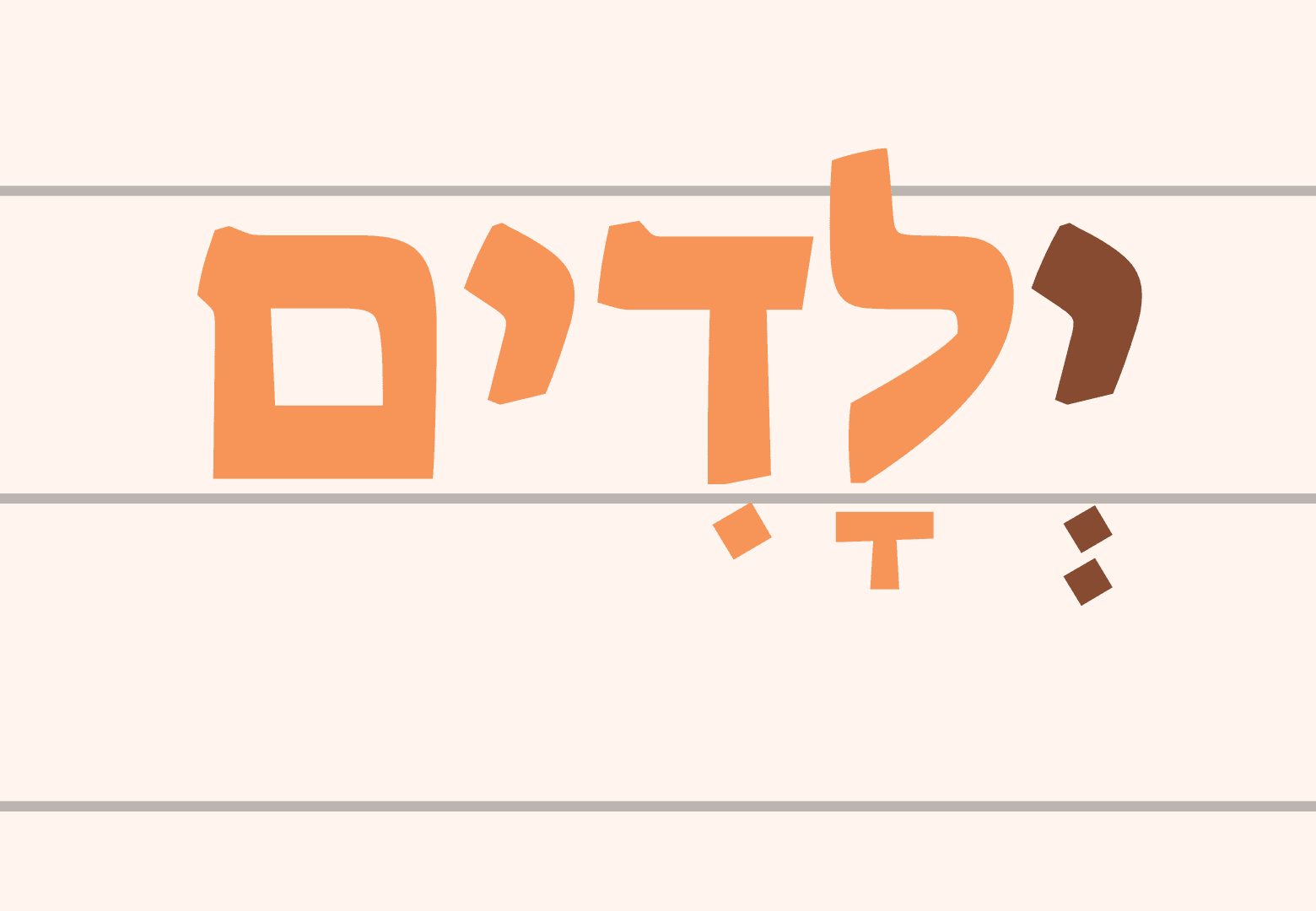
Mobile shva — pronounced
It sounds like a very short "e". By the traditional rules it appears at the start of a word, after a long vowel, and under the first of two identical letters.
ye-la-dim
children
The dageshבגד כפת letters
What one dot does
A dagesh is a dot inside a letter that changes its pronunciation. The light dagesh appears in the בגד כפת letters and swaps a soft sound for a hard one: ב or בּ, כ or כּ, פ or פּ.
In modern Hebrew the distinction survives only in ב, כ and פ. In ג, ד and ת the pronunciation is identical.
When does a light dagesh appear?
- At the start of a word: בּ, כּ, פּ are hard, that is b, k, p.
- After a silent shva: the following letter usually takes a light dagesh.
- There are exceptions that depend on the structure of the word and on attached affixes.
Pronunciation side by side
b / v
k / kh
p / f
ג, ד and ת once had this distinction too, but in modern Hebrew it is essentially gone.
Words with and without a dagesh
bayit
house
lev
heart
kelev
dog
melakhim
kings
pe
mouth
sefer
book
Tip: read each pair out loud. The difference between b and v, k and kh, or p and f is audible at once, and that is what fixes it in memory.
The link to the silent shva
A silent shva is often followed by a בגד כפת letter carrying a light dagesh. That is why the two are taught together — recognising one helps you recognise the other.
These rules are guidelines, not absolutes. Exceptions depend on the morphological shape of the word.
Summary and next steps
What we covered
- 22 letters, written right to left, with no capitals.
- Five final forms that mark the end of a word.
- Start with the print shapes: they are what printed text uses.
- A final form is a variant of the same letter, not an extra one: מֶלֶךְ ← מְלָכִים.
- Silent versus mobile shva, and what it does to the rhythm of a word.
- The light dagesh in בגד כפת letters and how it changes the sound.
How to keep practising
Next, learn the vowel signs in the nikud lesson. Then read short vocalised texts aloud, mark the shvas and dageshim for yourself, and only later move on to unvocalised text, relying on context and on the vowel letters (matres lectionis).
Flashcards for the final letters and for the pairs בּ/ב, כּ/כ, פּ/פ are worth making. Five minutes a day is enough.
Practice the words from this lesson
The same words, five ways to play. Your best score is kept on this device; sign in to earn XP and keep your streak.
Ready to Test Your Knowledge?
Match each Hebrew word to its correct English translation. Build your streak and show off your skills! 🎯
- 10 questions
Lesson test
Test yourself: Reading & Letters
4 questions from the whole lesson, about 1 min. Score 70% or more and the lesson counts as done.
Tip: answer with the number keys 1–4.
How was this lesson?
Thirty seconds of your feedback shapes the next lesson.
Tap a star to start
Practise Reading & Letters in the HEMY app
Games on this lesson's words and a voice conversation with AI on the same topic, so the rule turns into speech.



Scan with your phone camera
Frequently asked questions
- How many letters does Hebrew have?
- 22. Five of them — כ, מ, נ, פ, צ — take a final shape at the end of a word, but those are not extra letters, only variants of the same ones.
- Do I have to learn nikud?
- At the beginning, yes: nikud shows exactly which vowels a word contains. After a few months of reading you gradually move to unvocalised text and fill in the vowels from context.
- What is the difference between a silent and a mobile shva?
- A silent shva is not pronounced at all and marks the end of a syllable, while a mobile shva sounds like a very short "e". By the rules a shva at the start of a word is mobile, but in everyday speech it is often swallowed (סְפָרִים, sfarim).
Finished this lesson?
Mark it complete to track your path through the grammar course.