Numbers
Every number from one to ten has two forms, and the noun decides which one you use. Here is the system, in six short steps.
The surprise: the feminine forms are the short ones, and it is the masculine forms that end in ־ָה.
Numbers have genderthe core rule
The noun decides
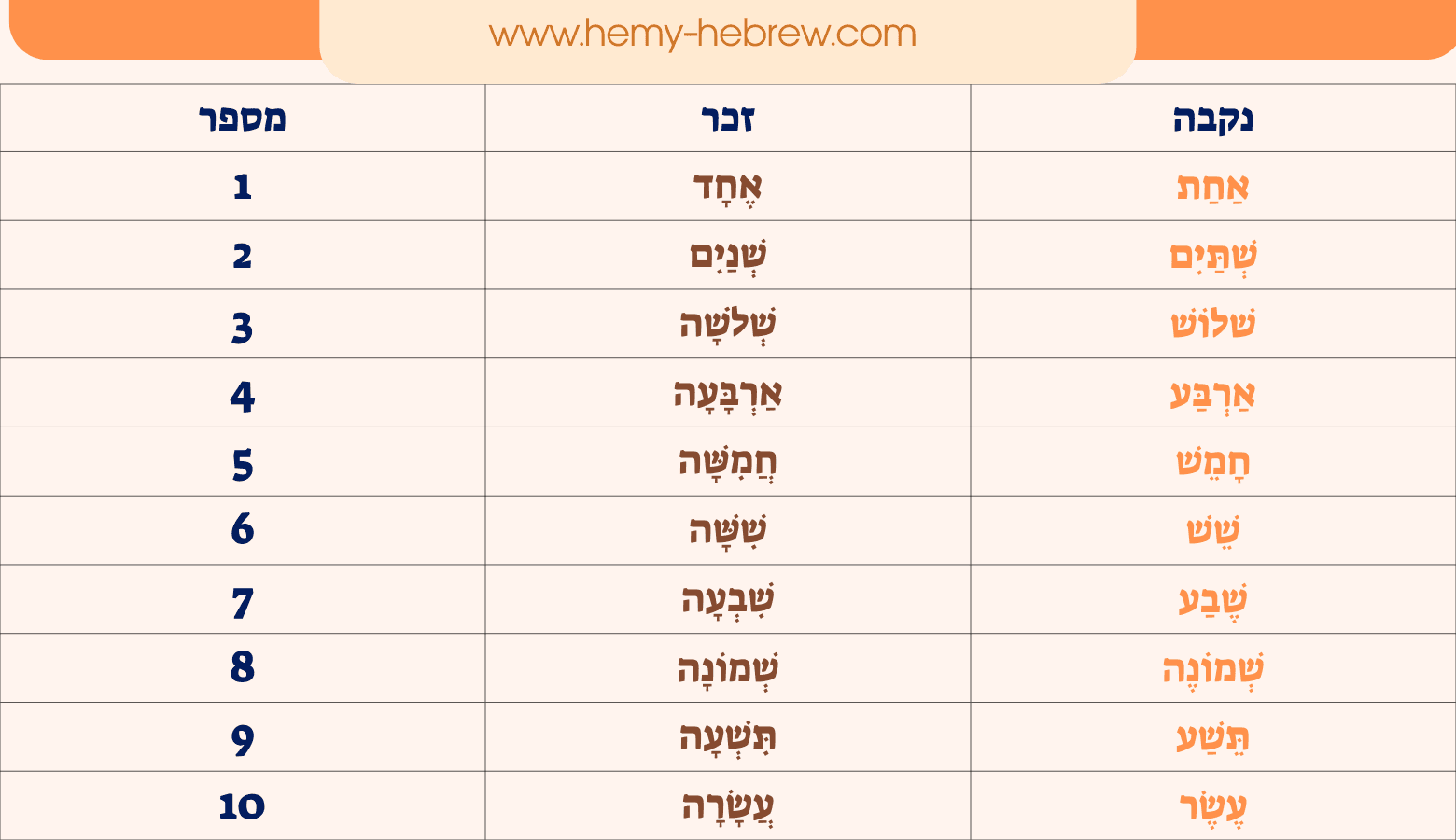
Every Hebrew noun is masculine or feminine, and a number agrees with the noun it counts. So “three” is שְׁלוֹשָׁה with a masculine noun and שָׁלוֹשׁ with a feminine one.
Counter-intuitively, the masculine numbers are the longer ones, ending in ־ָה. The feminine numbers are short. Learn both columns together.
Not sure of a noun's gender? Most feminine nouns end in ־ָה or ־ֶת; the rest you memorise with the word.
One to ten
| Number | masc. | fem. |
|---|---|---|
| 1 | אֶחָד | אַחַת |
| 2 | שְׁנַיִם | שְׁתַּיִם |
| 3 | שְׁלוֹשָׁה | שָׁלוֹשׁ |
| 4 | אַרְבָּעָה | אַרְבַּע |
| 5 | חֲמִשָּׁה | חָמֵשׁ |
| 6 | שִׁשָּׁה | שֵׁשׁ |
| 7 | שִׁבְעָה | שֶׁבַע |
| 8 | שְׁמוֹנָה | שְׁמוֹנֶה |
| 9 | תִּשְׁעָה | תֵּשַׁע |
| 10 | עֲשָׂרָה | עֶשֶׂר |
For plain counting (1, 2, 3…), phone numbers and arithmetic, Hebrew uses the feminine column.
One comes after the noun
Noun first, then “one”
Unlike every other number, “one” behaves like an adjective: it follows the noun and agrees with it. יֶלֶד אֶחָד, not אֶחָד יֶלֶד.
Because it sits after the noun, “one” is also how you say “a certain”: יוֹם אֶחָד means “one day” and “some day”.
One boy, one girl
yeled ekhad
one boy
yalda akhat
one girl
sefer ekhad
one book
makhberet akhat
one notebook
Two: a special form before a noun
שְׁנַיִם becomes שְׁנֵי
On its own, “two” is שְׁנַיִם (masculine) or שְׁתַּיִם (feminine). Directly before a noun it shortens to שְׁנֵי and שְׁתֵּי, and it goes before the noun like all numbers from two upward.
This is the construct form you will meet again with nouns (בֵּית סֵפֶר). Numbers two and up always come before the noun.
Alone and with a noun
Alone
shnayim
two (counting masculine things)
shtayim
two (counting feminine things)
Before a noun
shnei yeladim
two boys
shtei yeladot
two girls
Three to ten before the noun
Number + plural noun
From three up, the number comes first and the noun is plural. Pick the number's gender from the noun: שְׁלוֹשָׁה יְלָדִים but שָׁלוֹשׁ יְלָדוֹת.
Watch nouns whose plural ending contradicts their gender: שֻׁלְחָנוֹת (tables) is masculine, so it is שְׁלוֹשָׁה שֻׁלְחָנוֹת; שָׁנִים (years) is feminine, so it is שָׁלוֹשׁ שָׁנִים.
Money and time are frequent: שֶׁקֶל is masculine (עֲשָׂרָה שְׁקָלִים), דַּקָּה and שָׁעָה are feminine (עֶשֶׂר דַּקּוֹת, שָׁלוֹשׁ שָׁעוֹת).
Everyday phrases
shlosha yeladim
three boys
shalosh yeladot
three girls
khamisha sfarim
five books
khamesh makhbarot
five notebooks
asara shkalim
ten shekels
eser dakot
ten minutes
Quick check
Three books. סְפָרִים is masculine.
___ סְפָרִים
Eleven to nineteen, and the round tens
Units keep their gender
Eleven to nineteen are the unit plus “ten”: עָשָׂר after a masculine unit, עֶשְׂרֵה after a feminine one. Both parts agree with the noun.
The round tens, twenty to ninety, and מֵאָה (a hundred) have one form for both genders. Here Hebrew finally gives you a break.
Twenty to ninety are the plural of the units: שָׁלוֹשׁ → שְׁלוֹשִׁים, אַרְבַּע → אַרְבָּעִים. Twenty comes from עֶשֶׂר → עֶשְׂרִים.
Eleven to fifteen
| Number | masc. | fem. |
|---|---|---|
| 11 | אַחַד עָשָׂר | אַחַת עֶשְׂרֵה |
| 12 | שְׁנֵים עָשָׂר | שְׁתֵּים עֶשְׂרֵה |
| 13 | שְׁלוֹשָׁה עָשָׂר | שְׁלוֹשׁ עֶשְׂרֵה |
| 15 | חֲמִשָּׁה עָשָׂר | חֲמֵשׁ עֶשְׂרֵה |
The round tens
Same form with masculine and feminine nouns: עֶשְׂרִים סְפָרִים, עֶשְׂרִים מַחְבָּרוֹת.
Compound numbers: 21, 34, 99
Tens, then וְ, then the unit
Say the tens, add וְ (and), then the unit. The tens never change; only the unit agrees with the noun: עֶשְׂרִים וְאֶחָד סְפָרִים but עֶשְׂרִים וְאַחַת מַחְבָּרוֹת.
Before שְׁנַיִם, שְׁתַּיִם, שְׁלוֹשָׁה and שְׁמוֹנָה the “and” is pronounced u-: שְׁלוֹשִׁים וּשְׁנַיִם.
Twenty-one and thirty-two
עֶשְׂרִים וְאֶחָד סְפָרִים
esrim ve-ekhad sfarim
twenty-one books
עֶשְׂרִים וְאַחַת מַחְבָּרוֹת
esrim ve-akhat makhbarot
twenty-one notebooks
שְׁלוֹשִׁים וּשְׁנַיִם תַּלְמִידִים
shloshim u-shnayim talmidim
thirty-two students
שְׁלוֹשִׁים וּשְׁתַּיִם יְלָדוֹת
shloshim u-shtayim yeladot
thirty-two girls
Counting out loud
When you count without a noun (a phone number, a price, an exercise) use the feminine forms: אַחַת, שְׁתַּיִם, שָׁלוֹשׁ, אַרְבַּע…
Common mistakes
- שָׁלוֹשׁ יְלָדִיםשְׁלוֹשָׁה יְלָדִים
יְלָדִים is masculine: use the long form שְׁלוֹשָׁה.
- אֶחָד יֶלֶדיֶלֶד אֶחָד
“One” follows the noun.
- שְׁנַיִם יְלָדִיםשְׁנֵי יְלָדִים
Before a noun, two is שְׁנֵי / שְׁתֵּי.
- עֶשְׂרִים וְאַחַת סְפָרִיםעֶשְׂרִים וְאֶחָד סְפָרִים
In compound numbers the unit agrees with the noun: סְפָרִים is masculine, so וְאֶחָד.
What to remember
- Numbers 1–10 agree with the noun's gender; the feminine forms are the short ones.
- “One” comes after the noun; everything else comes before it.
- Before a noun, two is שְׁנֵי / שְׁתֵּי.
- Round tens and a hundred have one form; in 21–99 only the unit agrees.
Practice the words from this lesson
The same words, five ways to play. Your best score is kept on this device; sign in to earn XP and keep your streak.
Ready to Test Your Knowledge?
Match each Hebrew word to its correct English translation. Build your streak and show off your skills! 🎯
- 10 questions
How was this lesson?
Thirty seconds of your feedback shapes the next lesson.
Tap a star to start
All your Hebrew in your pocket
Download the app and keep learning anywhere: lessons, practice, games and progress synced with your account.
Smart practice anytime
Short lessons, games and flashcards same as the web, just in your pocket.
Reminders and daily streaks
Gentle notifications that keep you consistent, without the noise.
Works offline too
The words and lessons you started keep working on the bus.

Scan with your camera to download


Frequently asked questions
- Which forms do I use for counting or for a phone number?
- The feminine ones: אַחַת, שְׁתַּיִם, שָׁלוֹשׁ… They are the default when no noun is being counted.
- How do I say “two” before a noun?
- Use the short construct form: שְׁנֵי with masculine nouns (שְׁנֵי יְלָדִים) and שְׁתֵּי with feminine nouns (שְׁתֵּי יְלָדוֹת).
- Why is it שְׁלוֹשָׁה שֻׁלְחָנוֹת if the noun ends in ־וֹת?
- Because the plural ending does not decide gender. שֻׁלְחָן is a masculine noun with an irregular ־וֹת plural, so the masculine number is used.
Finished this lesson?
Mark it complete to track your path through the grammar course.